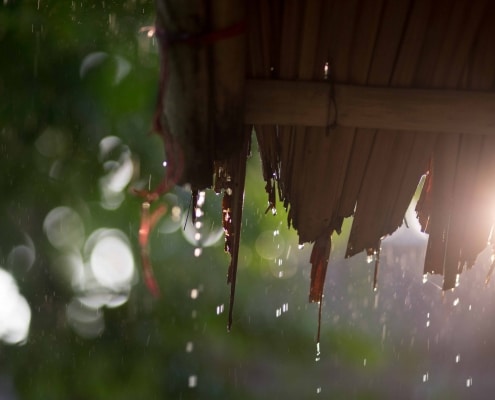
 The southern region of Thailand, where the Ban Ton Sae STEF site is located, really has only two seasons – the wet and the dry. These seasons do not occur at the same time on the east and west sides of the southern peninsula. On the west coast, where STEF is located, the southwest monsoon brings rain and often heavy storms from April through to October, while on the east coast the most rain falls between September and December. Overall the southern parts of Thailand get by far the most rain, with around 2,400 millimetres every year, compared with the central and northern regions of Thailand, both of which get around 1,400 millimetres.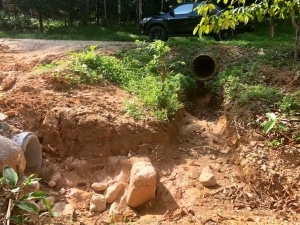
Because of this, before the next stage of laying the turf, it has been necessary to equip the site with sufficient irrigation and drainage. As the weather is naturally unpredictable, the irrigation was installed as a backup for any prolonged dry spell.
It was vital to select the correct sized water pump and this was then connected to a water supply linked to source of the pools. These pipes were then directed up and along the slope by the pools to where the turf is planted, with specially-designed holes to regulate the release of water along the pipe. With the drainage, we have to ensure the site does not flood as this could lead to erosion of the loose, freshly-moved soil, and damage to the turf by over saturating it. We had 25 sections of large concrete drainage pipes delivered and installed in order to prevent this soil run-off and flooding.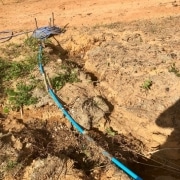
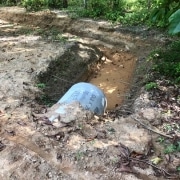 Now we are close to the rainy season, it is crucial that we prepare the site properly to ensure our hard work up up to now is not just washed away…
If you can help us with this practical and essential infrastructure work, please do. The elephants deserve the best. You can donate if you click here.
But do come back next week to read about the next stage of progress on the Ban Ton Sae site!
 digger on site is very handy in progressing onto the next stage – forming the structure and topography of the land to create a usable and accessible environment where the elephants can graze and roam. Our Technical Adviser, Lee Sambrook, and Jake are very pleased with progress.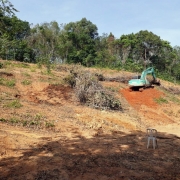
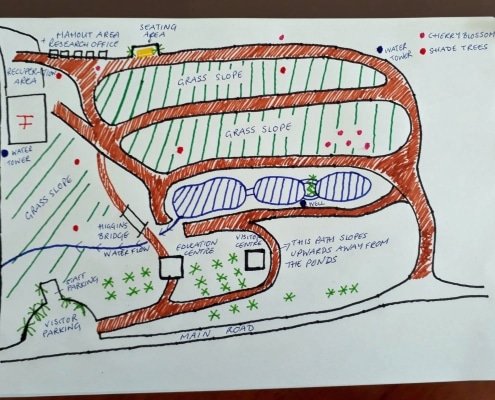
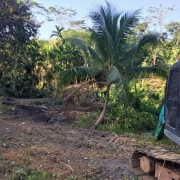 The digger has been used carefully to design and forge the pathways around the site. This was done in order to route visitors around the site via higher vantage points and the pools to see the elephants grazing and bathing from the best possible view, and to enjoy the planned cascading water between the pools. The paths also neatly direct visitors past the planned sites for the education, visitor and research centres, as well as the hospital, in the order we would like them to. As the paths grant the digger more access to different areas deeper into site, and closer to the pools, in the north west of the the site, this allowed the ground to be flattened using the combination of the digger and a roller to form a base ready to construct the stilts that will be the hospital’s foundations. The lower path by the pools will also permit the digger to get even closer to the pools in order to dredge them, and restructure the edges.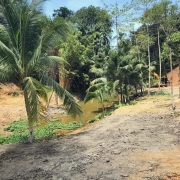
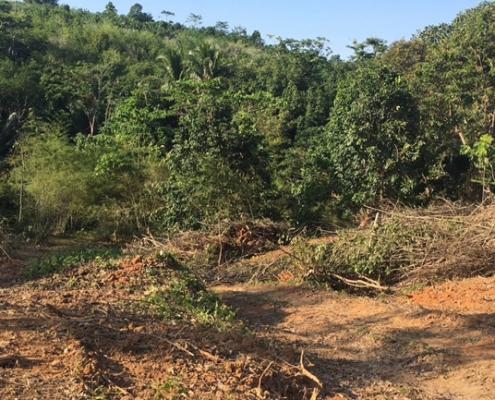 Well! Thanks to the amazing work of our local Thai team, over 100 rubber trees were removed in three weeks with a workforce of only three. Jake has now had to get the digger in before the rains start in order to clear the land of remaining unwanted vegetation and other plant waste, as well as excavate out the rubber tree stumps, ready to plant our native jungle species of plants and tree. If you can help us with this work please do by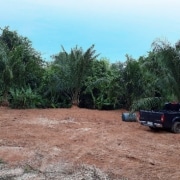
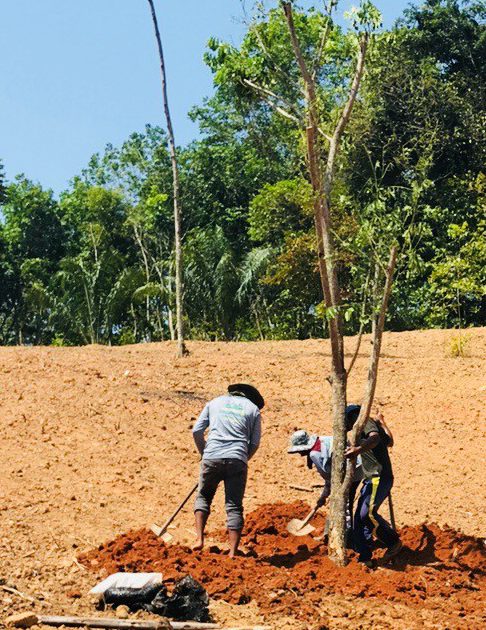
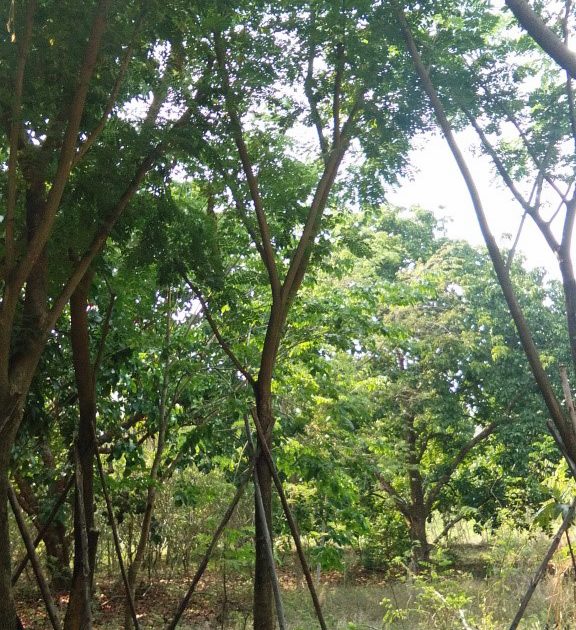 nce again be safely managed for the care of elephants. Hundreds of rubber trees have removed and many palm oil trees and new grass is now growing on the old plantation site. With the coming of the rainy season in May we are hoping this will really bloom in the next few months and become lush green grazing. The new, natural forest trees will grow fast to provide shelter and shade for our elephant population, and to provide additional food sources for the Park’s natural bird and animal populations.
 “Ban Ton Sae promises to be an important biodiversity site yet the rubber trees and palm oil plantations over the years have led to it becoming degraded and fragmented with a sad loss of species diversity. We want to nurture our flora in a sensitive ecological way while providing an optimal environment for our elephants”.
 The Trustees of Southern Thailand Elephant Foundation (STEF) are delighted to launch this website and with it this new and important charity.
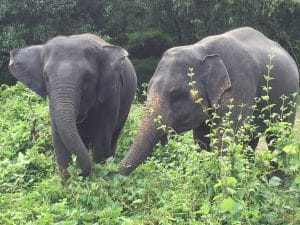 STEF was set up in late 2017 to help channel the generosity of the many people who want to help preserve the magnificent Asian Elephant in Southern Thailand by promoting Education, Welfare and Health care, and through understanding, explaining, and enhancing the pivotal position that the elephant has in Thai culture.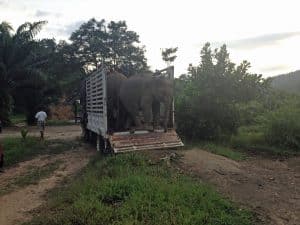
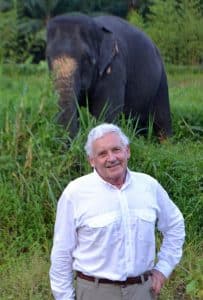 are used but never abused. This is the objective of Southern Thailand Elephant Foundation.
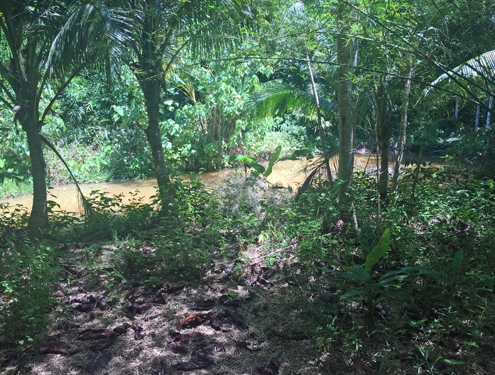 In the central area of the site, several man-made pools were discovered – their former use being to irrigate the commercial rubber trees and other plants on the site, which have since been partially cleared as you will have read in our previous posts. We desperately want to make use of these pools, and to integrate them into the elephants’ natural habitat and provide them with an access for bathing and cooling as well as drinking. It is vital that Asian elephants have regular access to a large water source in order to hydrate properly, maintain a healthy skin condition, and of course to cool down as elephants are unable to sweat through the skin.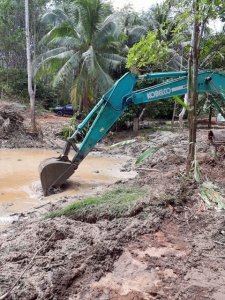
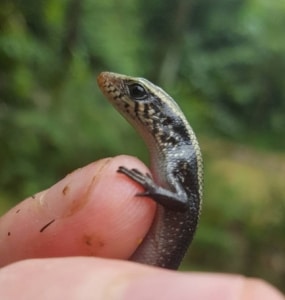 shrimps and the occasional frog and lizard, and he was able to identify the fish as mainly gouramis, which are freshwater fish native to Asia and very common to this region. As part of the survey, it was necessary to compare our findings to pond life expected in Southern Thailand, which includes catfish, Snakehead and
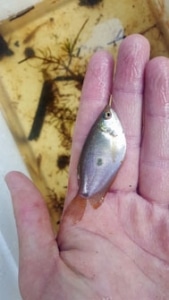 various Carp species, as well as the gouramis found by Cameron.
 more plants and trees, such as banana, mango and even the occasional jack-fruit tree.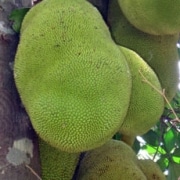
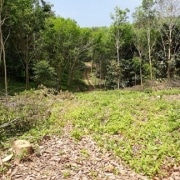 A local contractor has provided a construction excavator and a small team to help us clear the land. We have also started looking for a volunteer to help us examine the three man-made ponds at the site, to carry out a small survey to determine what species of animal may live in them.
 The newly acquired 16 rai (6.5 acre) site at Ban Ton Sae was previously used as a rubber tree plantation, but it also has palms that are harvested for palm oil as well as natural durian and other fruit trees. There are three large man-made ponds at the site, which were used for irrigation and form a lovely feature of the surroundings. The site has challenging sloped land and quite undulating surfaces. There are only three areas on the site where the ground can be described as flat, which makes the planning process very interesting as we have to be creative with our ideas for the new terrain.
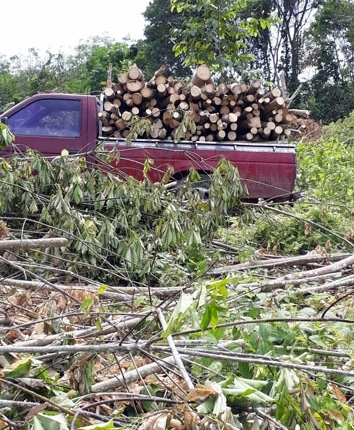
 elephants. People from the local community are being employed to cut down the rubber trees and remove them from the site. The timber will be sold to generate funds to help pay for the conversion of the land to a more ecofriendly system that will include planting the most appropriate flora for elephants to enjoy in a natural environment.
 Here you can see photos of the new site just as we started to cut down the rubber trees in February 2018 – this is the first stage of recreating a perfect and ecofriendly environment for our future family of elephants. To help us, please