Nam Tarn’s Tale No. 3: Beckham and the Burden on His Feet
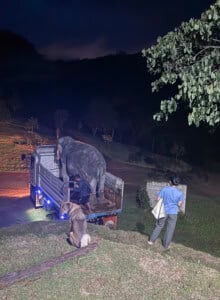
I always know when something serious is coming. It’s in the way the humans move—quicker, sharper—and in the way the air changes. Elephant trouble has a smell, and I’ve learned every shade of it. That morning, the call came about Beckham, a 22yearold tuskless bull from Phang Nga. I feel I have met him before. He’s calm, steady, and carries himself like an old tree—quiet strength, deep roots. But today, even before he arrived, I could sense the weight of worry. When the truck pulled in, Beckham stepped down slowly, favouring his left forelimb. I padded over, tail low, watching every movement. Elephants don’t hide pain well—not from me, anyway.
As the vets examined him, I circled close, nose working overtime. His left foot pad was thin—too thin. I’ve seen this before. When pads wear down, every step becomes a reminder of how heavy an elephant truly is. Beckham shifted his weight, trying to spare the limb, and I felt a pang in my chest. No creature should have to think about every step. But then came the real shock.
Beckham lifted his right hind leg just enough for the vets to see. I caught the scent immediately—necrosis, the unmistakable smell of tissue that has given up the fight. A wooden object had penetrated deep into the foot. The tissue around it was black, friable, breaking apart like burnt leaves. It looked painful, but Beckham—brave soul—still bore weight on it. Elephants are like that. They carry on, even when they shouldn’t. I would have loved to have pressed myself against his foreleg, offering the kind of comfort only a dog can give but I must keep my distance so I put my nose in the air and raised my head to let him know I sensed his discomfort and reassure he was in safe hands. He rumbled softly, a low vibration that travelled through my ribs. That’s elephant for “I know you’re here.”
The team got to work. I took my usual post—front row, ears up, ready to supervise ever hoping I may be called to duty. I watched with interest whilst our vet carefully trimmed the overgrown foot pad, careful and precise, cleaned the wound, removing the dead tissue piece by piece and they looked so focussed and gentle. The smell in the air changed as they worked. I wagged. Progress always smells good. Beckham stood quietly in our safety stocks, trusting every touch. That’s the thing about elephants—they know when someone is trying to help and they don’t mind being tethered in the interests of safety.
Some cases shake me. Some make me proud. Beckham’s did both. He arrived carrying pain in two limbs, yet still stood tall. He let my humans work with patience that humbled me. And he reminded me—again—that elephants are
masters of endurance. As he left the hospital, after munching on some much welcome greenery, he was moving a little easier. I watched from the hospital hill as the transport lorry slowly navigated our steep hilly driveway. As it progressed I ran at a safe distance behind it while the rest of the human team stood and waved goodbye. We all needed him
to know: No elephant walks alone at STEF.
Until the next patient arrives,
Nam Tarn Official Chief Sniffer and Visitor Greeter
STEF Elephant Centre